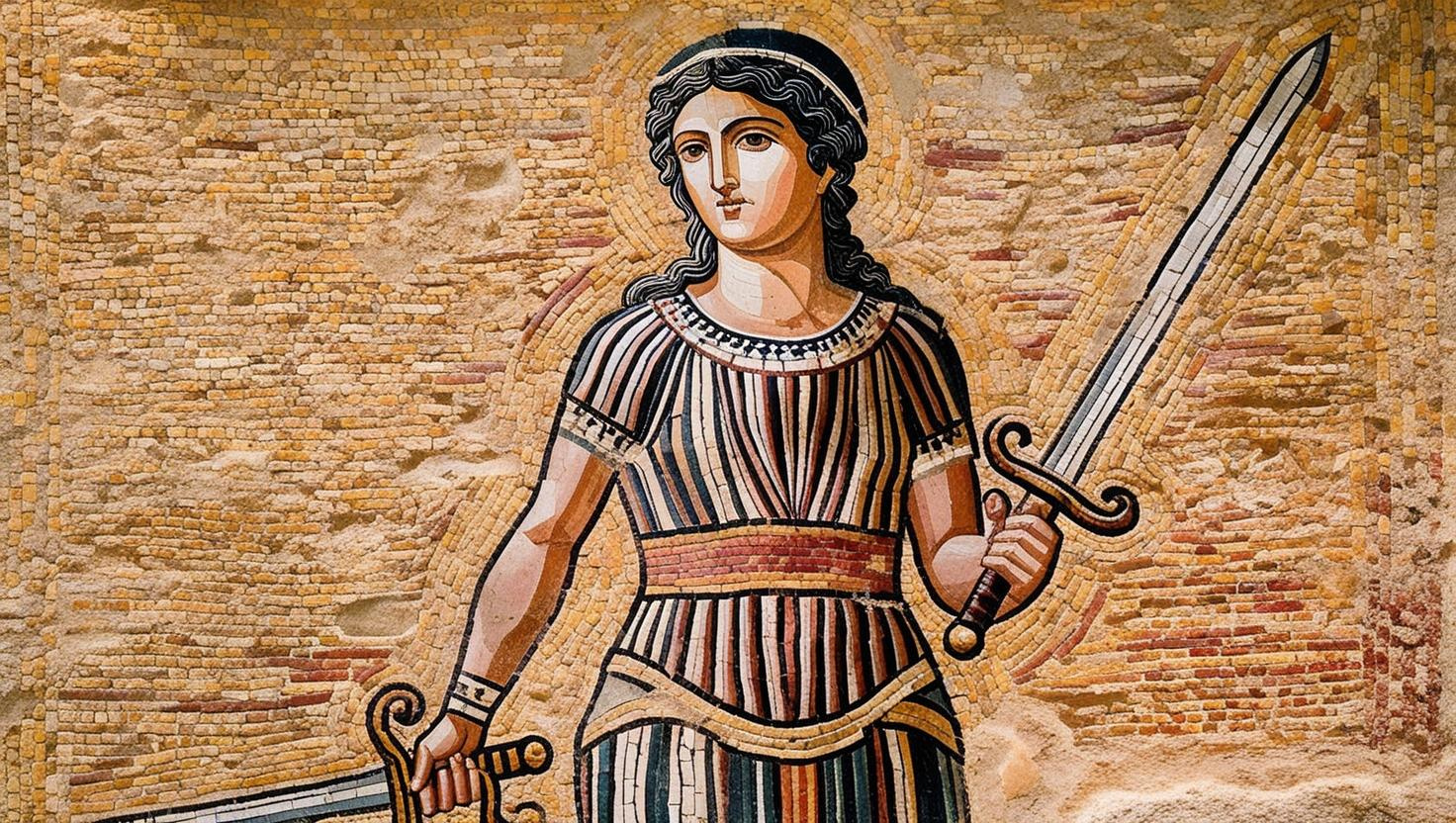
Top 4 Reasons Junia Was a Woman and an Apostle
Until recently, translations often concealed the name of one of the apostle Paul’s most important female colleagues, Junia, whom he praised in his letter to the Rome’s Christian community (Romans 16:7).
You might not have heard of her for the following reasons:
1. Grammatical Gender Change
Throughout the first twelve centuries of Christianity, commentators and translators uniformly recognized the name in Romans 16:7 as “Junia” and celebrated her as an apostle. The shift to the masculine name “Junias” began in translations from the 13th century onward, driven by male Christian leaders who struggled with the idea of female religious authority. For example, when Martin Luther translated the New Testament into German in 1522, he added a masculine article to Junia’s name and referred to Junia and Andronicus as “men of note among the apostles.” Subsequently, most translations followed continued the error.
2. The Name “Junias” is a Fabrication
The masculine name “Junias” is entirely absent from all ancient Greek and Latin literature, inscriptions, epitaphs, and letters. However, the feminine name “Junia” was among the most common for women in the Roman world. The name “Junias” was not used in English translations before the late 19th century, but gained wider acceptance and was used throughout much of the 20th century in most Bibles. The deception has now largely been abandoned in contemporary translations due to modern scholarship.
3. The Greek Grammar Places Her Among the Apostles
After the attempt to change Junia’s gender through grammar failed, a second strategy gained traction to demote Junia. The Greek phrase used in Romans 16:7 most naturally means “prominent among the apostles,” placing Junia squarely within that distinctive group. Some commentators insist the verse in Paul’s letter should be translated to say that Andronicus and Junia were “well-known to the apostles” but not apostles themselves. Most scholars regard this as a misunderstanding of the plain sense of the original Greek. If both names were clearly male, such as “Andronicus and Herbert,” no interpreter would deny their place among the apostles.
4. Paul Used the Term “Apostle” for Leaders
Another strategy to diminish Junia’s role is to claim that the Greek word apostolos (“apostle,” literally, “one sent”) means she was simply a messenger. That sense of the term appears in a few places in the New Testament, but Paul clearly wasn’t invoking it when he vigorously described himself as an apostolos. He placed himself on the same footing as the “twelve” whom Jesus commissioned as his delegates (also described as apostolos). For Paul, apostleship began with a direct experience of the resurrected Jesus and continued with establishing early Christian communities and overseeing their teachings. He used the word to mean a specific, appointed leadership role within the early Christian community. By applying the title to Junia and Andronicus, Paul confirmed their authoritative, foundational roles in the movement, just as he did for himself. If apostolos was good enough for Paul and for the “twelve” Jesus commissioned, why shouldn’t it be good enough for Junia?
This is an example of how women’s leadership abilities have been suppressed throughout history. In my novel Junia: The Forgotten Apostle, I reimagine the life of the woman long erased from memory and return her to the place she deserves as a figure of courage, intellect, and authority.
Use my Contact Form and let me know your thoughts on this summary of why Junia was an apostle. Has it changed your view on women’s leadership roles in the Bible or in today's world?